Flower Line Art Crack Embroidery Design Review
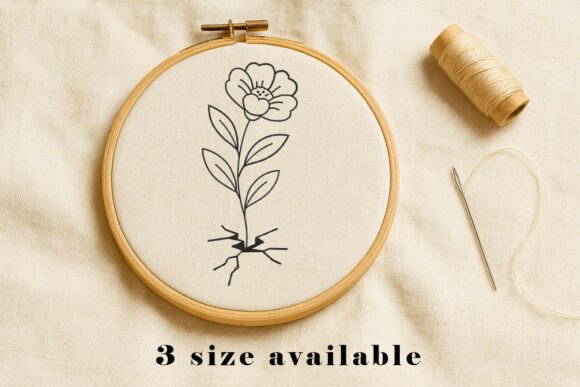
As a designer who has spent years navigating the delicate balance between artistic vision and machine reality, I approach every new machine embroidery design with a critical eye. The market is flooded with generic motifs, but occasionally, a piece arrives that speaks to something deeper. That is exactly my first impression of the Flower Line Art Crack Embroidery Design. This is not just another decorative motif; it is a narrative stitched into thread. The concept of a flower pushing through cracked ground offers a powerful visual metaphor for resilience, hope, and growth. For anyone running a craft business, selling on Etsy, or creating personalized gifts, this kind of meaningful imagery can elevate a simple product into a conversation starter.
Visual Impact and Design Philosophy
The aesthetic of this design relies heavily on its clean outline structure. Unlike dense, filled designs that can sometimes look heavy or dated, the line art style feels modern, airy, and sophisticated. When I visualize this as an embroidery file ready for production, the simplicity stands out. It avoids the clutter often found in complex floral arrangements, focusing instead on the raw beauty of the stem breaking through the earth. This makes it incredibly versatile. It fits seamlessly into the category of Outline Flowers, yet it transcends the typical botanical theme by adding a story element.
In a real-world scenario, imagine you are preparing a custom embroidered tote bag for a client recovering from a difficult year. A standard rose might feel too cliché, but the Flower Line Art Crack Embroidery Design conveys strength without being aggressive. The visual personality is quiet confidence. Whether you are creating a handmade product for a boutique shop or a unique personalized gift, the mood it sets is one of encouragement. The layout allows the negative space to work for you, making the design feel intentional rather than crowded.
Performance in Real-Life Projects
When moving from the screen to the hoop, practical application becomes the true test. I have been testing similar line art concepts on various substrates, and here is how this specific design performs across different use cases. For custom apparel, such as a heavyweight cotton sweatshirt or a canvas apron, the clean lines translate beautifully. The lack of heavy fill stitch means less bulk, which is crucial for maintaining the drape of the fabric. If you are an Etsy seller looking to expand your inventory of sweatshirt embroidery, this design offers a professional look that doesn't require excessive stabilizer support compared to dense patterns.
Consider the potential for embroidered patch creation. Because the design is primarily linear, it cuts cleanly on felt or wool backing. You could produce a run of patches featuring this motif for a local non-profit or a small brand focused on mental health awareness. The symbolic nature of the cracked ground resonates well with communities seeking messages of recovery and perseverance. Additionally, for baby embroidery projects, like a soft pillow cover or a blanket corner, the gentle curves of the flower provide a soothing visual that parents appreciate. It is subtle enough for nursery decor but distinct enough to be recognized as a special detail.
This design also shines in holiday embroidery contexts where people seek gifts with meaning beyond the season. Instead of a generic holiday ornament, imagine this stitched onto a linen tea towel or a ceramic mug sleeve (via a fabric insert). It becomes a timeless keepsake. For commercial embroidery clients, the versatility allows it to serve as a logo accent or a brand asset that communicates core values without needing text.
Navigating Fabric and Hoop Challenges
While the design is robust, there are specific situations where caution is required. As with any line art, the integrity of the running stitch or satin columns depends heavily on the fabric texture. On highly textured fabrics like denim or thick terry cloth, the thin lines might get lost if the contrast isn't high enough. Always check your thread colors against the background material before committing to a full run. Dark fabrics will demand a lighter, perhaps metallic or bright white, thread to ensure the cracks and petals remain visible.
Hoop size is another critical factor. While the design appears compact, do not underestimate the need for adequate tension. If you attempt to stitch this on a very small hoop, the distortion at the edges could ruin the symmetry of the flower. Similarly, on stretchy fabrics like jersey knit, the pull of the needle can cause the fine lines to pucker. Using the proper stabilizer is non-negotiable here. A cut-away stabilizer is often better for line art on knits to prevent shifting over time.
Be wary of using this on curved surfaces like caps unless you have experience with cap hoops. The "cracked ground" element involves sharp angles that might not lay flat on a dome. In those cases, consider adapting the design for a flat patch that is then sewn onto the cap, rather than embroidering directly. Also, avoid placing this design in areas that undergo frequent washing and friction, such as the hem of jeans, as the thin lines are more prone to snagging than dense fills.
Practical Designer Notes for Success
To get the most out of the Flower Line Art Crack Embroidery Design, follow these practical steps before launching your project:
- Test on Scrap Fabric First: Never skip the test stitch. Run the design on a scrap piece of the exact fabric you plan to use. Check for skipped stitches or thread breaks, especially in the intricate corners of the cracks.
- Review Stitch Density: Even though it is line art, ensure the density is sufficient to cover the fabric without showing holes, but not so dense that it creates a hard ridge.
- Confirm Licensing: Before selling finished items or digital products, verify the license terms. Some digital embroidery files restrict commercial use, while others allow it. Ensure you are compliant to protect your small shop product line.
- Mockup in Black and White: Test the design in grayscale mockups to see how the contrast holds up. This helps predict how it will look on monochromatic garments.
- Check Thread Contrast: Plan your thread colors carefully. A light gray thread on a beige shirt might vanish, whereas a deep charcoal would pop.
- Inspect Small Details: After stitching, zoom in on the flower petals and the crack lines. Are they crisp? If not, adjust your machine tension or change needles.
Ultimately, the value of this design lies in its ability to transform a standard item into something with soul. Whether you are an experienced apparel decorator or a hobbyist starting a side hustle, the Flower Line Art Crack Embroidery Design offers a fresh take on floral motifs. It respects the limitations of the medium while maximizing emotional impact. By understanding its strengths and navigating its technical requirements, you can create finished products that customers will not only buy but cherish. This is the kind of design asset that builds trust and recognition for your brand, proving that thoughtful design always pays off in the world of handmade goods.